Summer Things to Do in Seattle You Shouldn't Miss
From paddleboards on Lake Union to a kite on the hill at Gas Works Park, here is how Seattle actually spends its short, sun-soaked summer, dock by dock, trail by trail, and market stall by market stall.
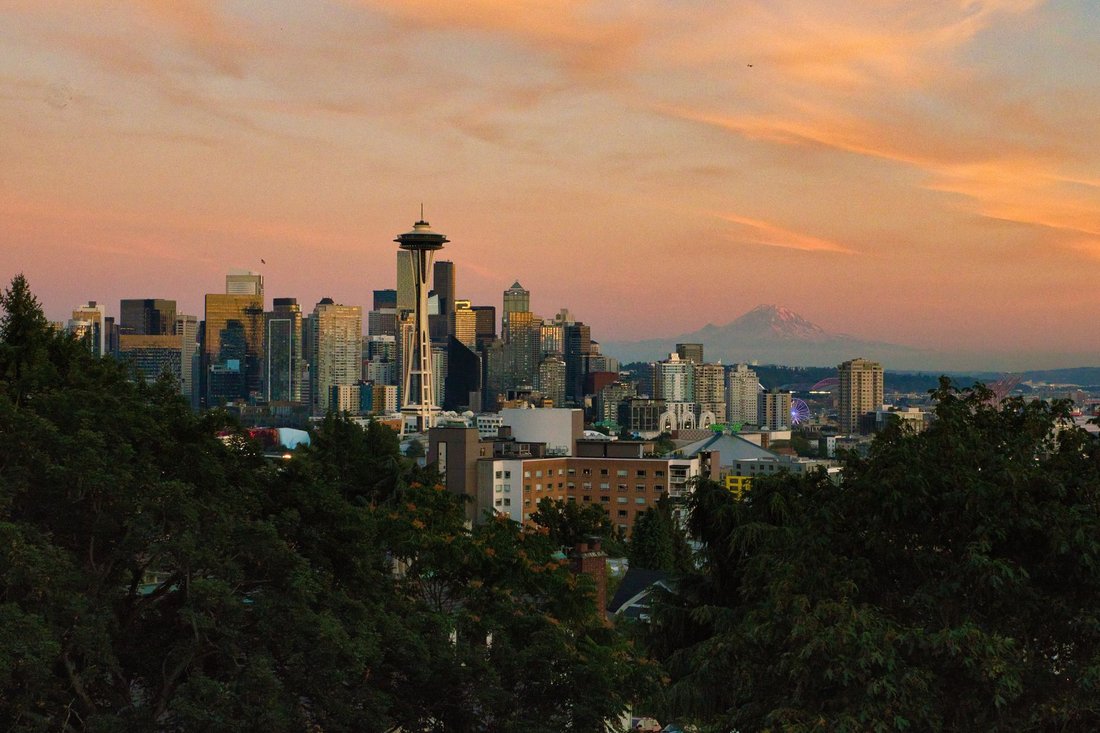
By eight o'clock on a July evening, the light over Elliott Bay still hasn't given up. It turns gold, then a ripe-peach orange, and from a stairway on Queen Anne or a bench at Alki Beach, you can usually catch Mount Rainier standing sharp and pink above the water. Locals call this "the mountain is out," said with the same shrug reserved for any good weather, because after a winter this gray, nobody trusts blue sky enough to make a fuss over it. That shrug is the real case for summer things to do in Seattle: the days run past nine, the marine layer burns off by mid-morning, and for roughly ten weeks the city stops being cautious about itself and goes outside.
This is not a list built around Pike Place salmon tosses and a photo at the gum wall, though the market earns its spot below for better reasons. It is a working guide to how Seattle actually spends its short, precious summer: on the water, on a trail, at a public market that still functions as a market, in a park built on an old gasification plant, at a ballgame under open roof or clear sky. It also means the city's summer festival calendar kicks into gear, with neighborhood street fairs and the hydroplane races and air show of Seafair filling August weekends on Lake Washington, so leave room in any itinerary for whatever happens to be going on when you land. For a broader companion to this one, see our full guide to things to do in Seattle.
Summer Things to Do in Seattle on the Water
Seattle sits on an isthmus between a saltwater sound and a freshwater lake system, and summer is when that geography actually pays off for visitors rather than just looking nice on a map. The boats come out, the beaches fill on the rare 80-degree day, and half the population seems to relocate to a dock.
Alki Beach
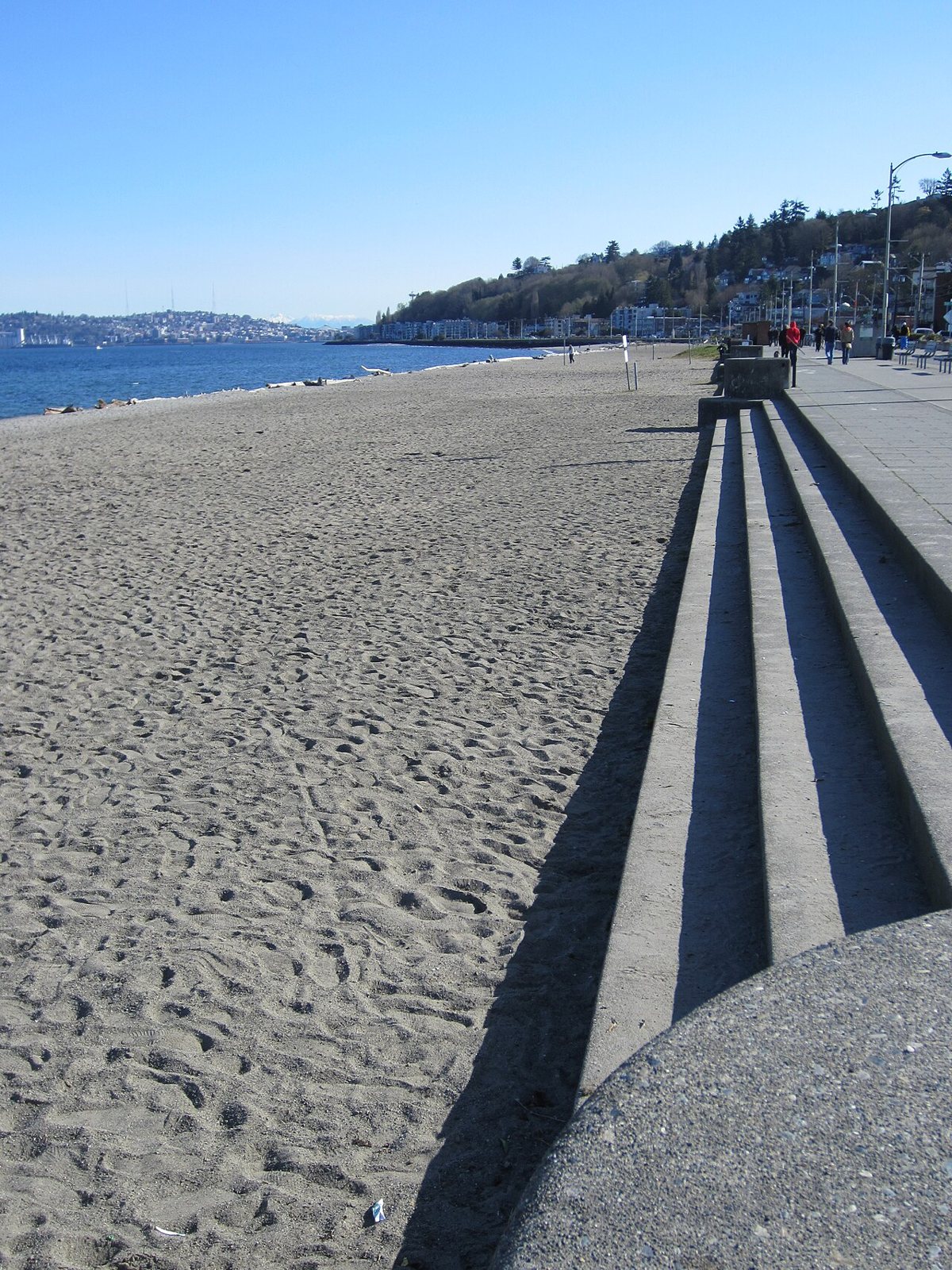
Alki is West Seattle's answer to a California boardwalk, minus the boardwalk hustle. A paved path runs along the sand for a couple of miles, packed with cyclists, runners, and people just carrying a beer down to watch the ferries cross Puget Sound. The beach itself is coarse sand and driftwood rather than anything postcard-soft, but the view back toward downtown, with the skyline rising behind the water, is one of the better ones in the city. Rent a bike at the north end and ride the length of it, then stop for fish and chips at one of the walk-up counters near the point. The insider move is to go on a weekday evening rather than a weekend afternoon, when the parking along Alki Avenue turns into its own small ordeal.

Golden Gardens Park
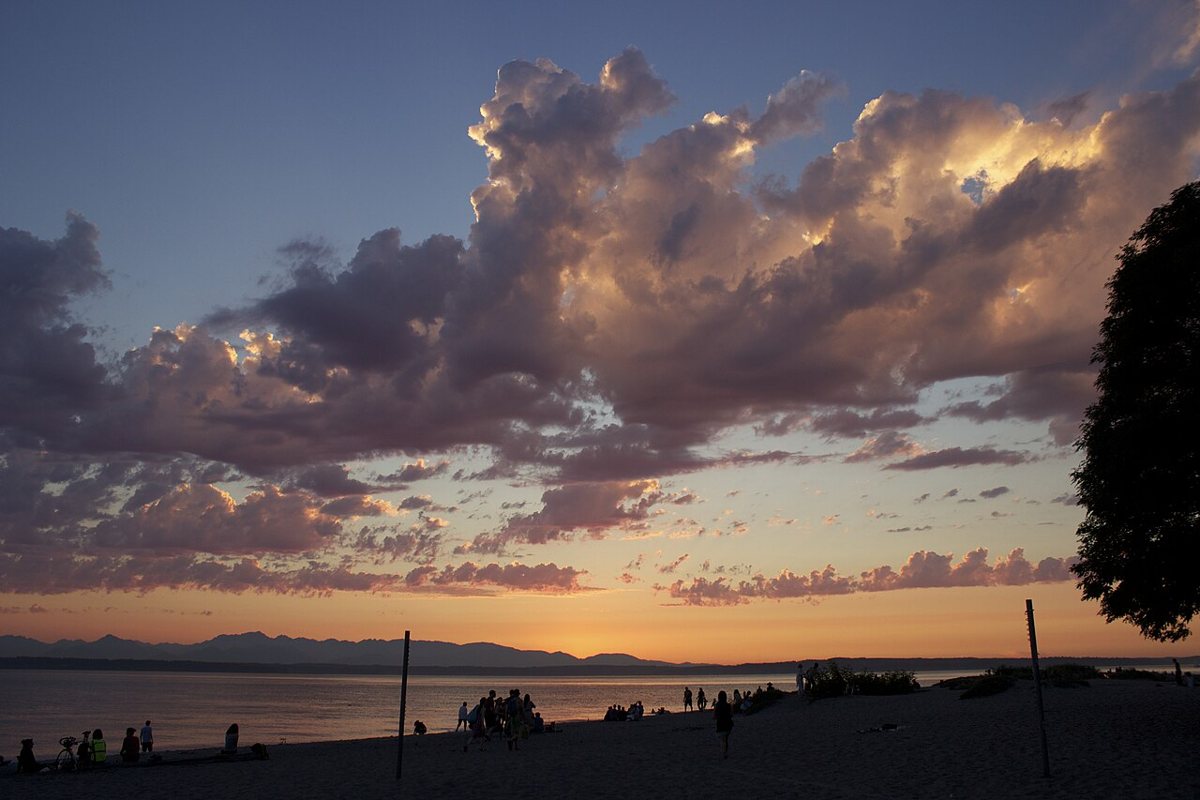
Golden Gardens, tucked at the north end of Ballard where the ship canal meets the sound, is where Seattle goes to watch the sun actually set into water, which does not happen at every beach in this city given the angles involved. There's a sandy stretch with fire pits that are genuinely used all summer, a boardwalk, and a slope of grass above the beach for anyone who'd rather not deal with sand. Bring your own firewood if you want a pit, since they go quickly on clear evenings, and check current park rules before you plan around one, since fire restrictions shift with the season. Beyond the fire pits, it's simply a good place to sit with a thermos and watch container ships and sailboats share the same water at dusk.

Lake Union
Lake Union is the working lake at the city's center, ringed by South Lake Union's tech campuses, houseboats that look exactly like the ones in old movies, and a steady stream of floatplanes taking off toward the San Juan Islands. Rent a kayak or a stand-up paddleboard from one of the outfitters near the south end and paddle past the houseboat docks, or take a slower turn on a wooden sailboat through the Center for Wooden Boats, which keeps a working fleet on the water rather than behind glass. It's an easy way to see the skyline, the Space Needle, and the working waterfront all from one seat. Come on a weekday morning if you want the lake mostly to yourself, since weekend afternoons draw every paddleboard in the city. On Tuesday evenings in summer, watch for the Duck Dodge, an unofficial, gleefully unserious sailboat race that fills the lake with spinnakers and has been going on for decades, best viewed from a waterfront bar rather than the water itself unless you already know someone with a boat.
The Ballard Locks
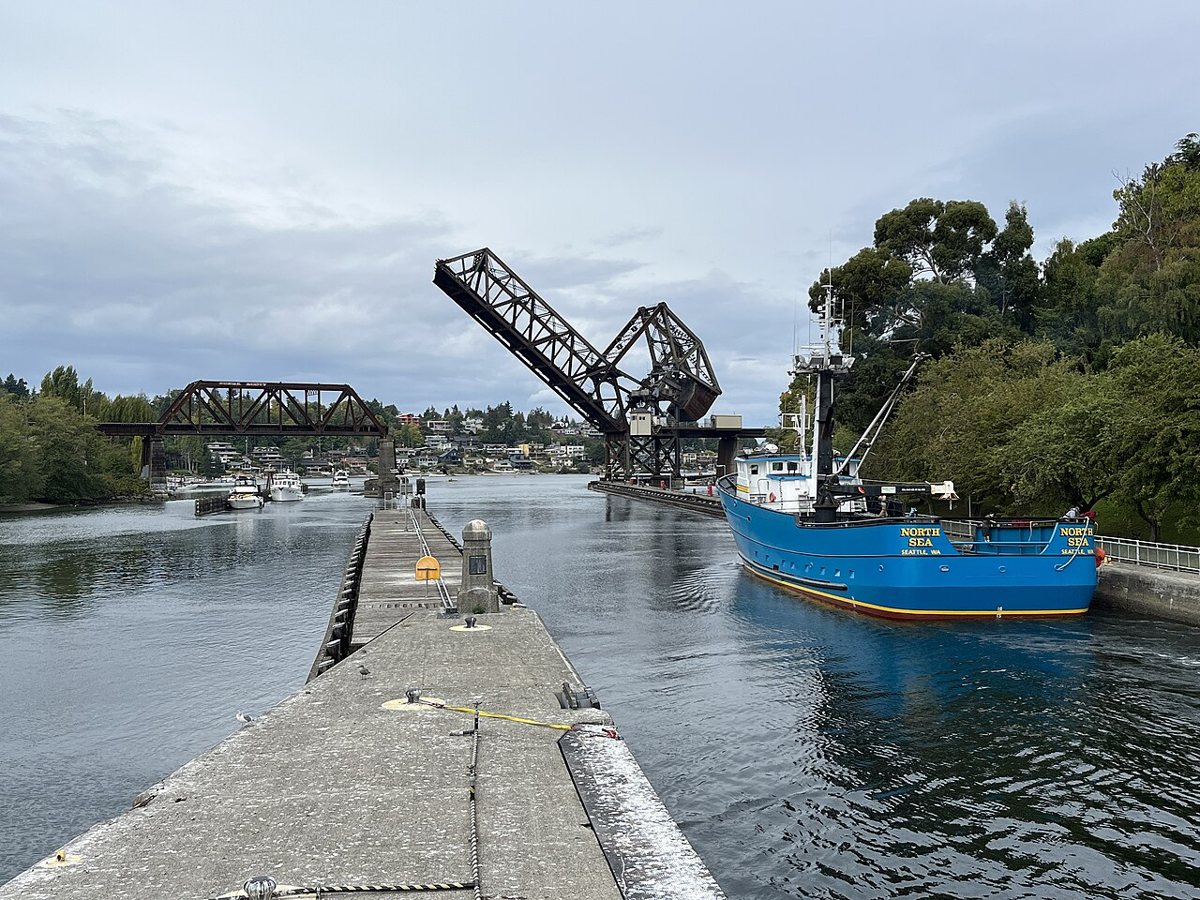
The Hiram M. Chittenden Locks do a genuinely useful thing, lifting and lowering boats between the saltwater of Puget Sound and the freshwater of the ship canal and Lake Union, and watching that happen is oddly satisfying even if you have no boat of your own. Peak traffic comes in summer, with everything from kayaks to yachts to the occasional fishing trawler working through the chambers. There's also a fish ladder on site with underwater viewing windows, and in summer you have a real shot at watching salmon fight their way upstream. Walk across the locks to the small park and gardens on the other side for a picnic spot with a view of the boat traffic. The best viewing is a weekend afternoon when recreational boat traffic peaks, though weekday mornings are calmer if you'd rather not compete for a spot at the railing.

Parks and Trails Built for Long Light
Seattle's relationship with its parks system runs deep and mostly unspoken. Nobody here brags about it the way a booster club might, but the Olmsted-designed bones of the park system mean that even a quick outing tends to land somewhere genuinely well planned. For a fuller rundown, see Seattle's best parks.
Gas Works Park
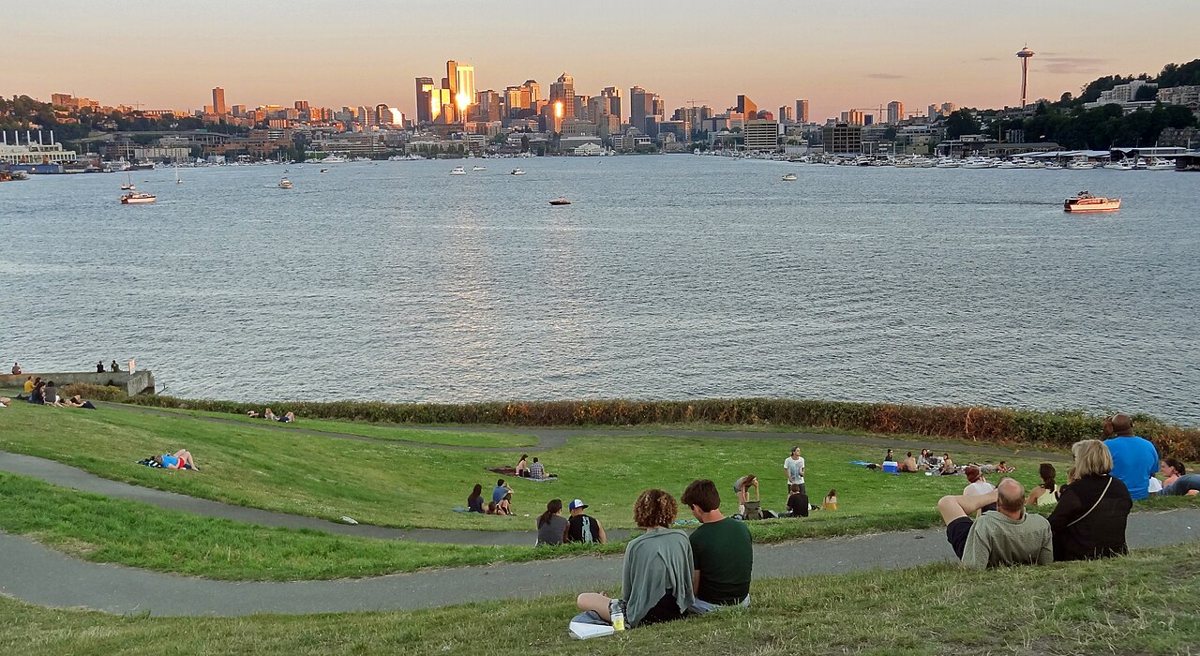
Gas Works Park is a former coal gasification plant turned public green space, and the industrial machinery, rusted towers and boilers left standing on the north shore of Lake Union, is the whole point rather than an eyesore to look past. Families fly kites off the grassy mound in the center, known locally as Kite Hill, and the view south across the water toward downtown ranks among the most photographed in the city, especially around sunset. It's also one of the better spots in town to watch the Fourth of July fireworks over the lake, though you'll want to claim ground early if that's the plan. On an ordinary summer evening, it's simply a good place to spread a blanket, watch paddleboarders cross the lake, and let the kids run the hill.

Green Lake Park
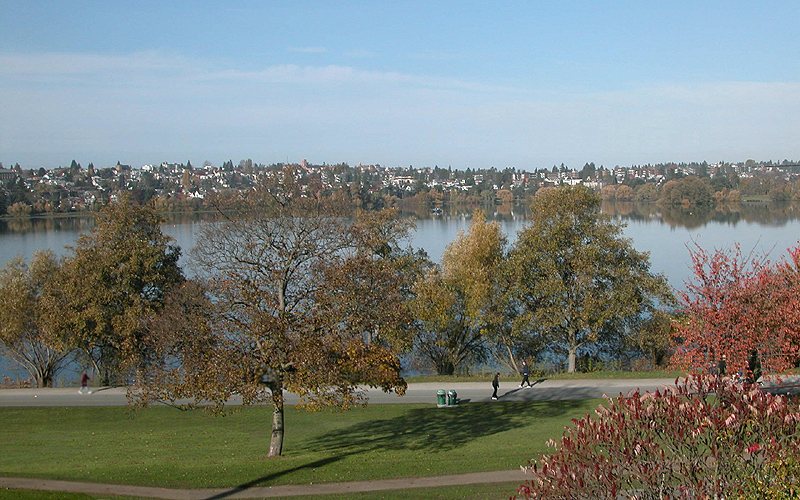
Green Lake is the neighborhood living room for the north end of the city, a nearly three-mile loop trail circling a genuinely swimmable lake, split into separate lanes for walkers, runners, and wheels so the joggers and the cyclists don't have to negotiate every few feet. In summer the grassy banks fill with picnic blankets, the swimming areas draw actual crowds, and you can rent a canoe or paddleboat from the boathouse on the east side. It's flat, shaded in patches, and doable in under an hour if you're just there for a loop rather than a whole afternoon. Go early if you want to swim without a crowd, since the lake gets genuinely busy by early afternoon on a warm weekend.

Discovery Park
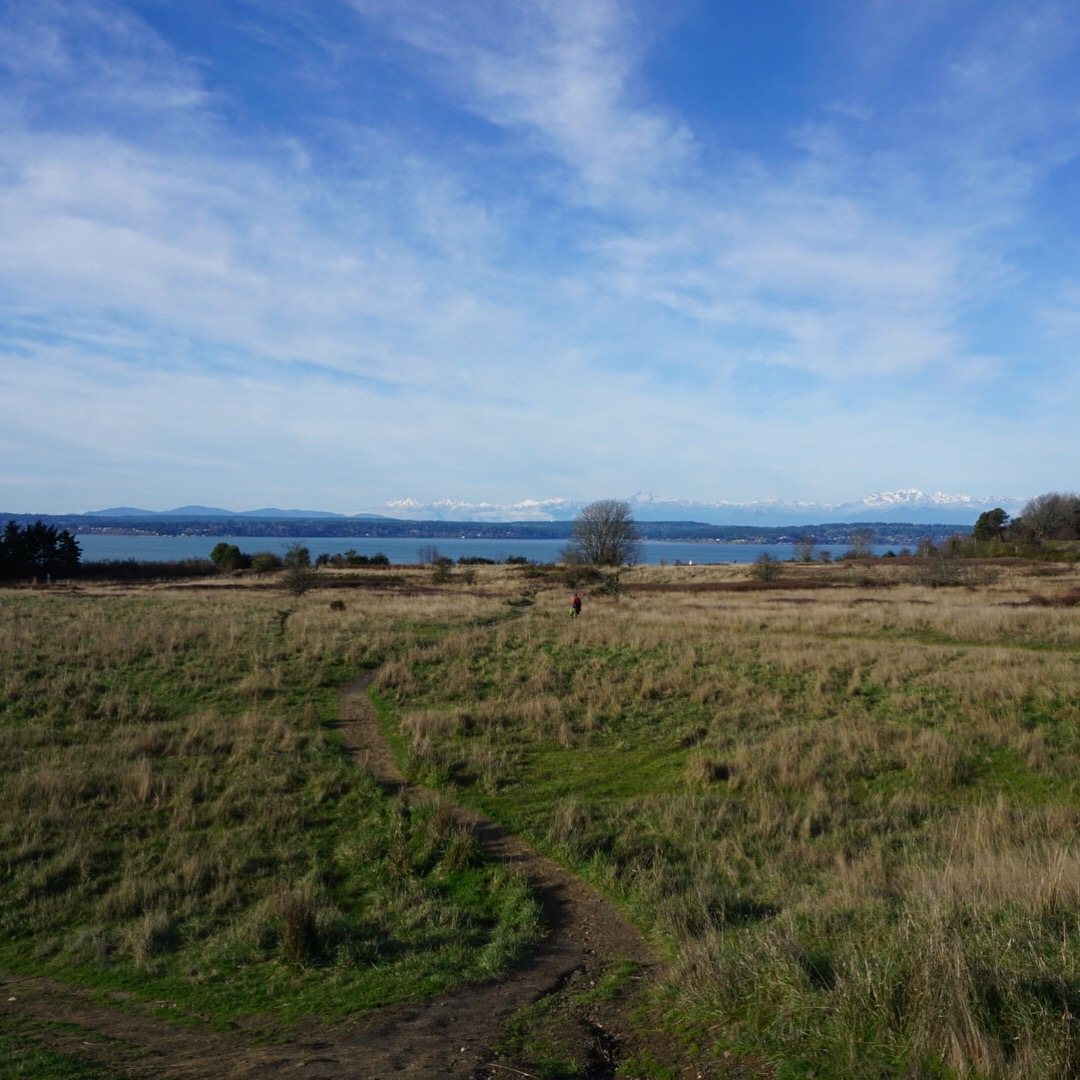
Discovery Park is the biggest park in the city by a wide margin, a former military base at the tip of Magnolia now given over to bluffs, meadows, second-growth forest, and a couple of miles of beach below the West Point Lighthouse. It's the closest thing Seattle has to genuine wilderness within city limits, and the loop trail through it takes a couple of hours if you do the whole thing, longer if you detour down to the beach. This is the season to actually make the descent to the water, since the bluff trails get slick and less appealing the rest of the year. Bring water and real shoes, because despite the city address, this one has real elevation change.

The Burke-Gilman Trail
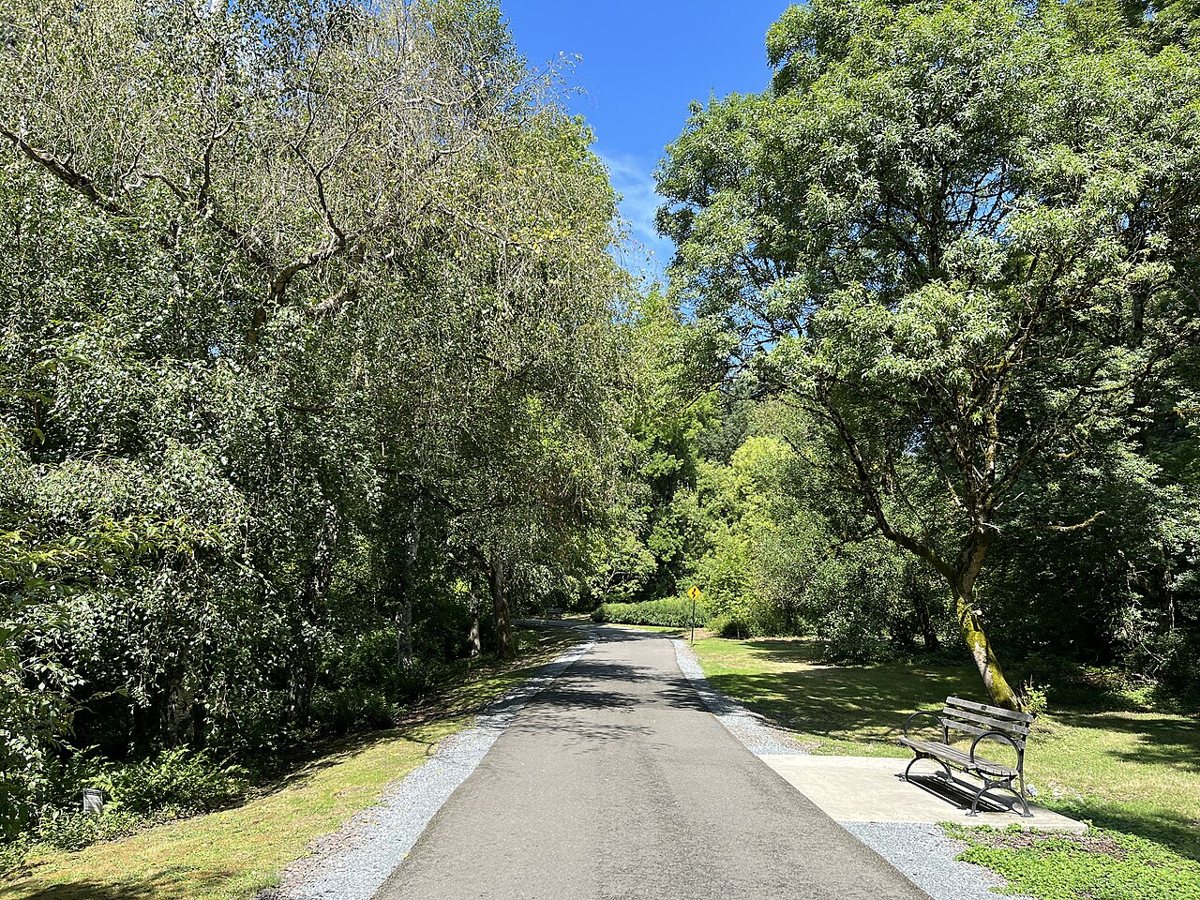
The Burke-Gilman is less a single destination than the connective tissue of summer in Seattle, a paved multi-use trail running roughly twenty miles along a former rail line from Golden Gardens through Fremont, past the University of Washington, and out along the lake shore toward Kenmore. Rent a bike anywhere along its length and you can string together several of the stops on this list, Fremont's market, the Locks, Gas Works, in a single ride. It gets genuinely crowded on a sunny Saturday, so keep to the right and announce a pass, the local etiquette that keeps things moving. Stretches near the University of Washington and along the Lake Washington shoreline toward Kenmore are quieter than the Fremont-to-Ballard section if you're after a calmer ride, and much of the route stays shaded enough to make a midday pedal tolerable even on a genuinely hot afternoon.
Washington Park Arboretum
The Arboretum, spread across more than two hundred acres along the shore of Lake Washington, is at its fullest in summer, when the collection of trees and native plantings is in complete leaf and the Arboretum Waterfront Trail lets you walk out over the water on boardwalks through the marsh. It's a quieter counterpart to the city's louder parks, better suited to a slow wander than a workout, with enough shade to make it a good midday option when the sun is at its strongest. Paddle a canoe out from the nearby launch and you can loop around the marshy islands from the water instead.

Markets and Neighborhoods
Seattle's neighborhoods are where the city actually reveals itself, and summer is when they're at their most legible, with produce stands and sidewalk tables doing the work that a guidebook otherwise has to describe secondhand.
Pike Place Market
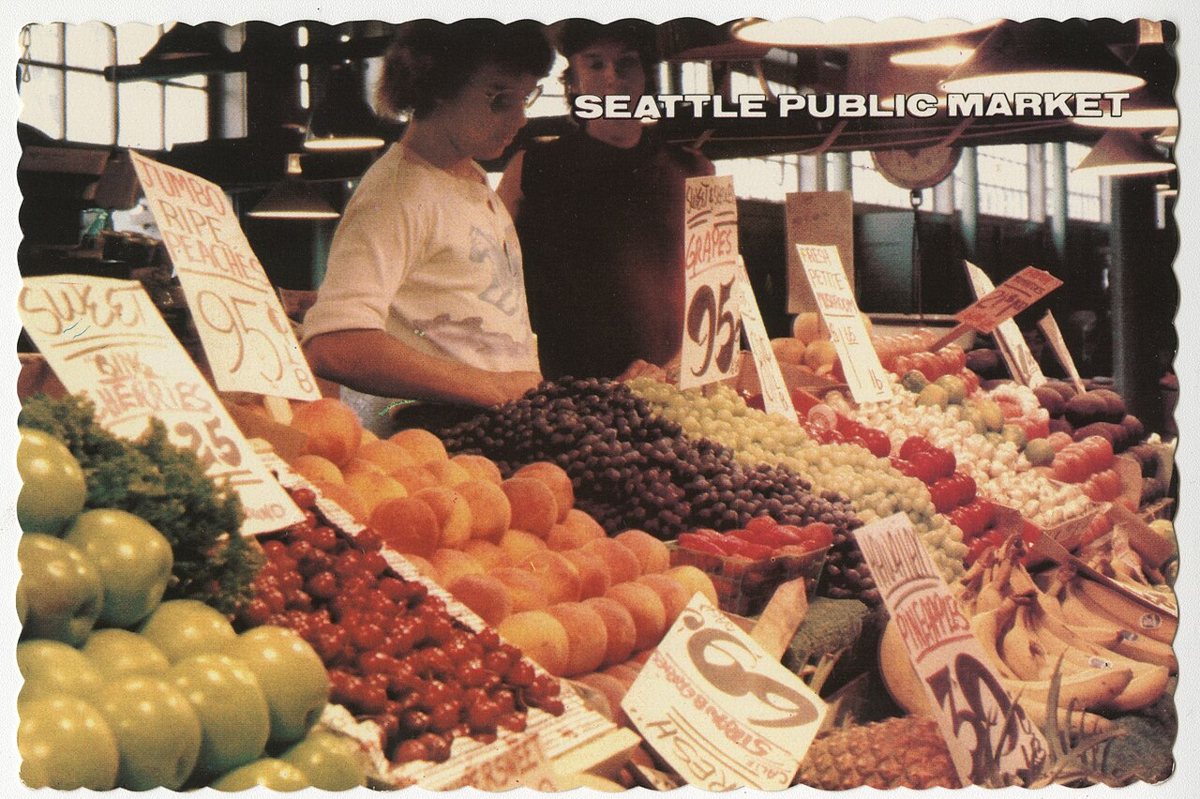
Pike Place is the one stop on this list every visitor already has circled, and it earns the visit for reasons well beyond the fish-throwing stall that dominates the postcards. It is a working farmers market first, with growers from across the region setting up under the same clock tower their predecessors have used for over a century, and the produce in July and August, cherries, berries, the first of the stone fruit, is worth the trip on its own. Skip the main arcade at midday and instead wander the lower levels and the side alleys, where the actual character of the place lives in small shops that have nothing to do with tourism. Arrive early on a weekday morning if you want to talk to the farmers rather than shuffle through a crowd.


The Fremont Sunday Market
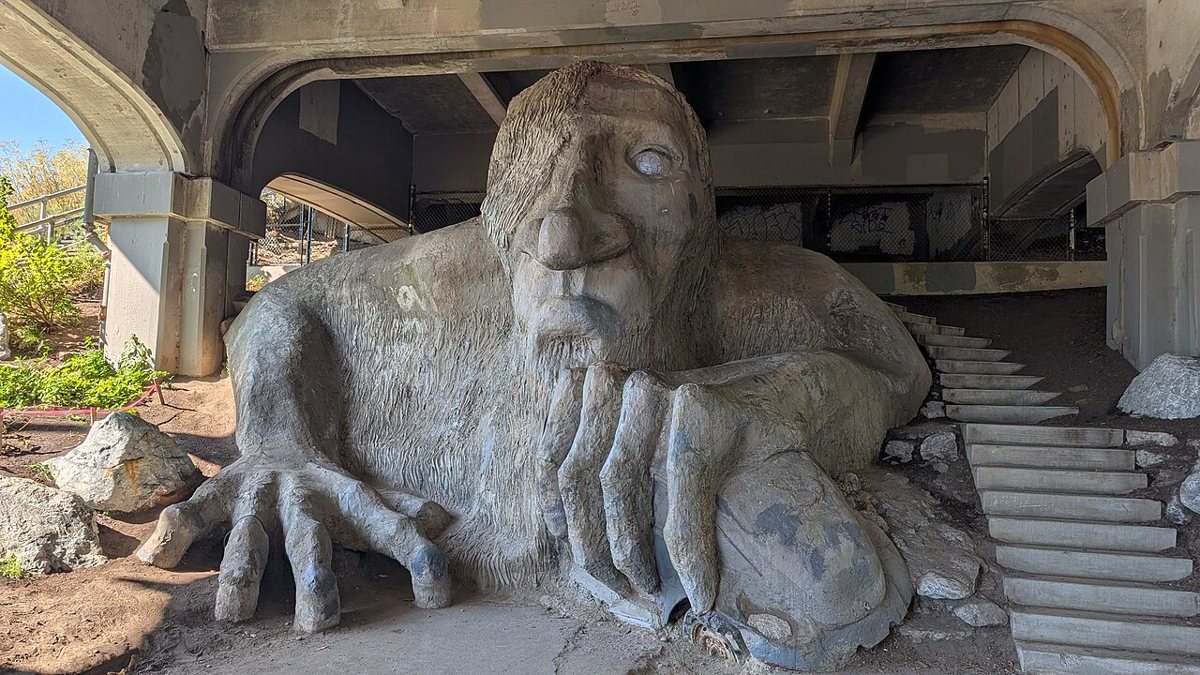
Fremont, the neighborhood that still calls itself the Center of the Universe with a straight face, runs an outdoor market every Sunday through the warm months, a sprawl of vintage clothing, produce, crafts, and food stalls along the ship canal. It has a looser, funkier energy than Pike Place, closer to a flea market crossed with a farmers market, and it's an easy way to spend a couple of unstructured hours browsing rather than checking off a list. Pair it with a walk to see the Fremont Troll under the Aurora Bridge and a stop at one of the neighborhood's breweries, since Fremont has become one of the city's better beer neighborhoods without losing its scruffiness.

Culture, Views, and a Ballgame
Summer isn't only an outdoor-recreation season here. The city's cultural institutions stay fully open through the warm months, and a couple of them are genuinely better in summer than any other time of year.
Seattle Center and the Museums
Seattle Center, built for the 1962 World's Fair and still anchored by the Space Needle, functions as the city's cultural campus, with the Museum of Pop Culture and the Seattle Art Museum's programming both reachable from the same stretch of ground, alongside the International Fountain, which draws kids and families on any warm afternoon. The season brings a heavier calendar of outdoor festivals and concerts to the grounds, and the fountain plaza alone is worth a stop even without a museum ticket, since it turns into an impromptu public pool the moment the temperature climbs. Check current hours before planning around a specific exhibit, since museum schedules shift seasonally. Downtown, the Seattle Art Museum's waterfront Olympic Sculpture Park adds a second, free outdoor option, a hillside of large-scale sculpture running down to the water, good for an hour of wandering before or after a trip to the piers.
Kerry Park
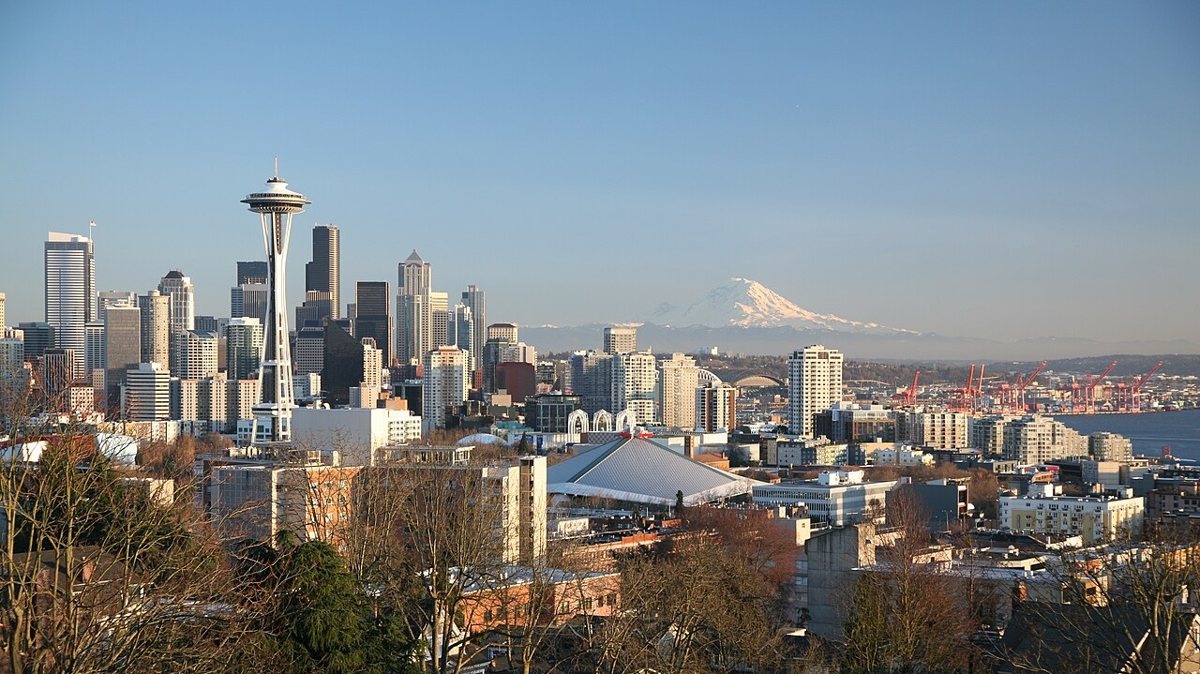
Kerry Park is a small viewpoint on Queen Anne Hill that has become the single most photographed spot in the city, for good reason. From the railing you get the Space Needle in the foreground, downtown's skyline behind it, and Mount Rainier on the horizon when the mountain is out, all in one frame. It's a narrow strip of grass rather than a real park in the recreational sense, so treat it as a stop rather than a destination, best timed for early evening when the light softens and, on a clear night, downtown starts to light up behind the Needle. Arrive on foot or expect to circle for street parking, since the lot is essentially nonexistent.

A Mariners Game at T-Mobile Park
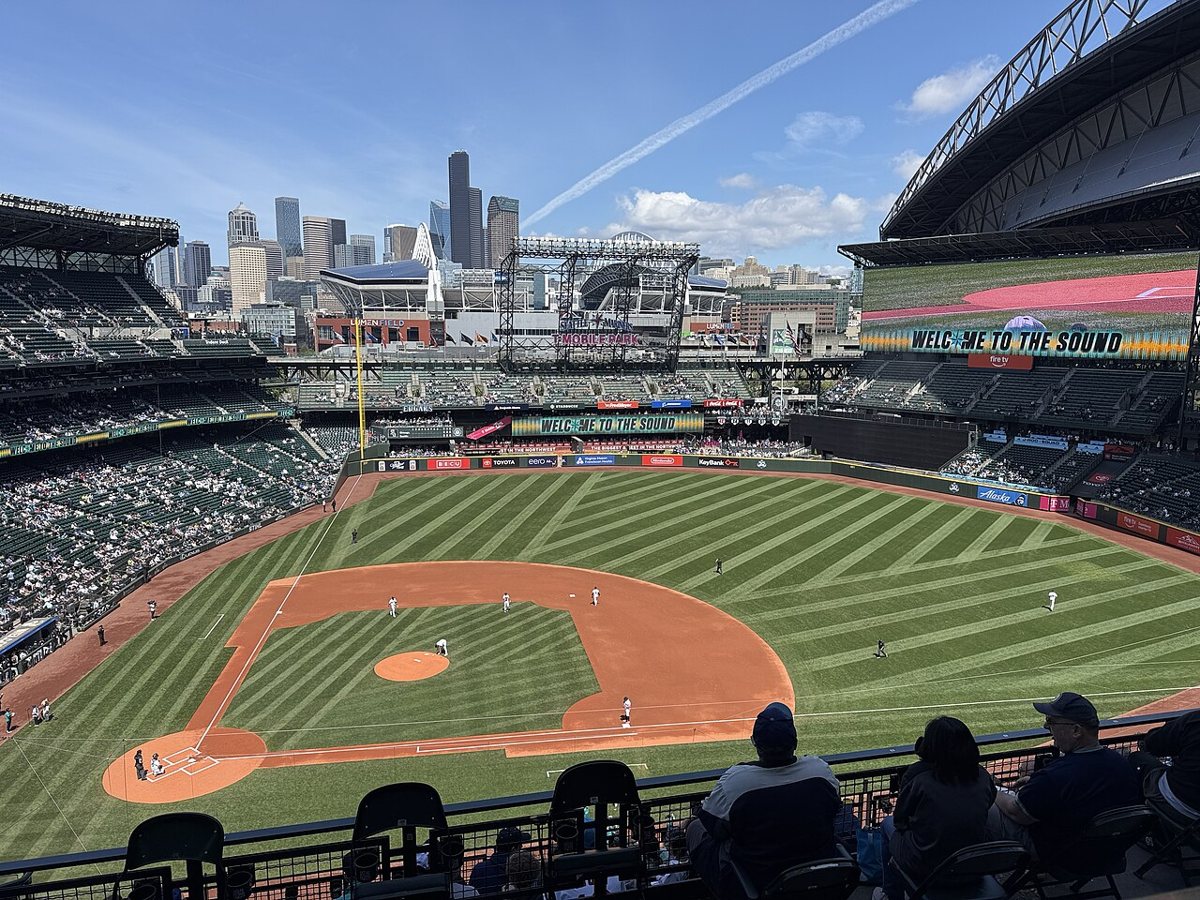
Summer in Seattle runs on the Mariners' schedule as much as it runs on daylight, and a night at T-Mobile Park remains one of the better ways to spend a warm evening regardless of how the standings look. The retractable roof means a game happens rain or shine, but the appeal on a clear evening is watching it open to the sky, with the light shifting over the outfield as the innings go by. The food has genuinely outgrown ballpark cliche, with plenty of options drawing on the city's own restaurant scene rather than the usual stadium fare, and the cheap seats in the upper deck still offer a real view of the field. Check the schedule before you go, since home stands cluster and road trips leave long gaps.

Getting Around, Timing It, and What's Free
A little planning saves a lot of standing around, especially in a city whose transit and traffic patterns don't always match visitor expectations.
- Getting around: Seattle's light rail connects the airport to downtown and north toward the University District, which covers a decent share of this list without a car. For the water-adjacent stops, Alki, Golden Gardens, the Locks, a car, rideshare, or a rented bike on the Burke-Gilman is more practical than transit alone.
- Timing: mornings tend to be clearer than afternoons in early summer, when marine layer can linger past nine. Weekday evenings beat weekend afternoons almost everywhere on this list for smaller crowds and easier parking.
- What's usually free: Kerry Park, Gas Works Park, Golden Gardens, Discovery Park, the Fremont Sunday Market's browsing, though bring cash for anything you buy, the Ballard Locks grounds, and a walk through Pike Place Market all cost nothing to visit, though individual vendors, rentals, and museum admissions vary. Always check current hours and any posted fees before you go, since they shift by season.
- Layers: pack a light jacket even on a forecasted-warm day. Evenings by the water cool off fast once the sun drops, whatever the afternoon high suggested.
- Ferries: the Washington State Ferries terminal downtown and the West Seattle water taxi both turn a short crossing into its own small outing, with skyline and mountain views from the water that you don't get from any shoreline park. Check current schedules and fares before planning a trip, since sailings vary by season and time of day.
What the Season Actually Asks of You
The mistake visitors make with Seattle summers is treating them like insurance against the rest of the year, cramming every waterfront and viewpoint into a single trip because who knows when the rain returns. Locals don't operate that way. They pick two or three things and let the rest of the season happen on its own schedule, a bike ride here, a market walk there, an evening at the lake because the light was good and someone had the night free. The place doesn't reward a checklist so much as a willingness to be outside without much of a plan, which is a strange thing to say about a city known for its caution. But that's the trade this weather makes: nine months of bracing for rain in exchange for ten weeks when nobody has an excuse left to stay in. Take the deal. Go find a dock or a hillside, and let the mountain, when it shows up, be the whole afternoon's reward. Whatever else changes about this city, and plenty does, that particular trade has held for as long as anyone here can remember, and it's still the best reason to plan a summer trip around it.