Best Parks in Seattle Locals Recommend
Twelve real Seattle parks, sorted by what you actually want out of an afternoon outside, from waterfront to old growth to the skyline view every postcard steals.
By 7 a.m. on a Tuesday, the loop trail at Seward Park already has company: a physical therapist walking off a night shift and two women speaking Amharic at a clip that outpaces their stride. A retired ferry captain feeds the crows near the boat ramp most mornings and swears one of them recognizes his truck. Bald eagles nest in the old-growth cedar above the point, and nobody looks up anymore, which tells you something about how ordinary abundance becomes in this city. Ask five Seattleites for their list of the best parks in Seattle and you will get five different answers, mostly because nobody agrees whether a park's job is exercise, scenery, quiet, or a decent place to watch the sun go down behind the Olympics.
Here is an attempt at all four, organized by what you are actually after rather than which one photographs best. None of these are secrets. They are the parks people who grew up here, or just never left, actually use.
Seattle's park system runs deeper than most cities its size, a legacy of early twentieth-century planning that treated green space as a civic obligation rather than an afterthought squeezed in once the real estate deals were done. That inheritance shows up now in odd, specific ways: a decommissioned gas plant nobody tore down, an old-growth grove that survived only because a peninsula made logging inconvenient, a hilltop street corner that just happens to frame the whole skyline. None of it was inevitable. Somebody, decades ago, decided it mattered.
Waterfront Parks Where the City Meets the Sound
Discovery Park
Discovery Park, out in Magnolia, is the biggest park in the city by a wide margin, and it earns the size. Hundreds of acres of second-growth forest give way to open bluff and a couple of miles of beach below sandstone cliffs that erode a little more every winter. The West Point Lighthouse sits at the bottom, reachable by a real hike down and, less fun, a real hike back up, and on clear days the Olympic Mountains fill the whole western horizon across the Sound. Most people walk the Loop Trail, a rolling 2.8-mile circuit through meadow and forest that never quite lets you forget you are inside city limits, then remember it anyway. For a longer trail day, the Cascades foothills are close enough to reach before lunch. Park in the north lot near the visitor center rather than circling for the closer spots, and bring a windbreaker even in July, since the bluff catches everything the Sound throws at it. Set aside two or three hours if you actually want to reach the beach and back, since the elevation change catches people who budgeted for a quick stroll. Daybreak Star Indian Cultural Center sits within the park grounds too, worth a stop if you want context on the land before it was a park at all.

Golden Gardens Park
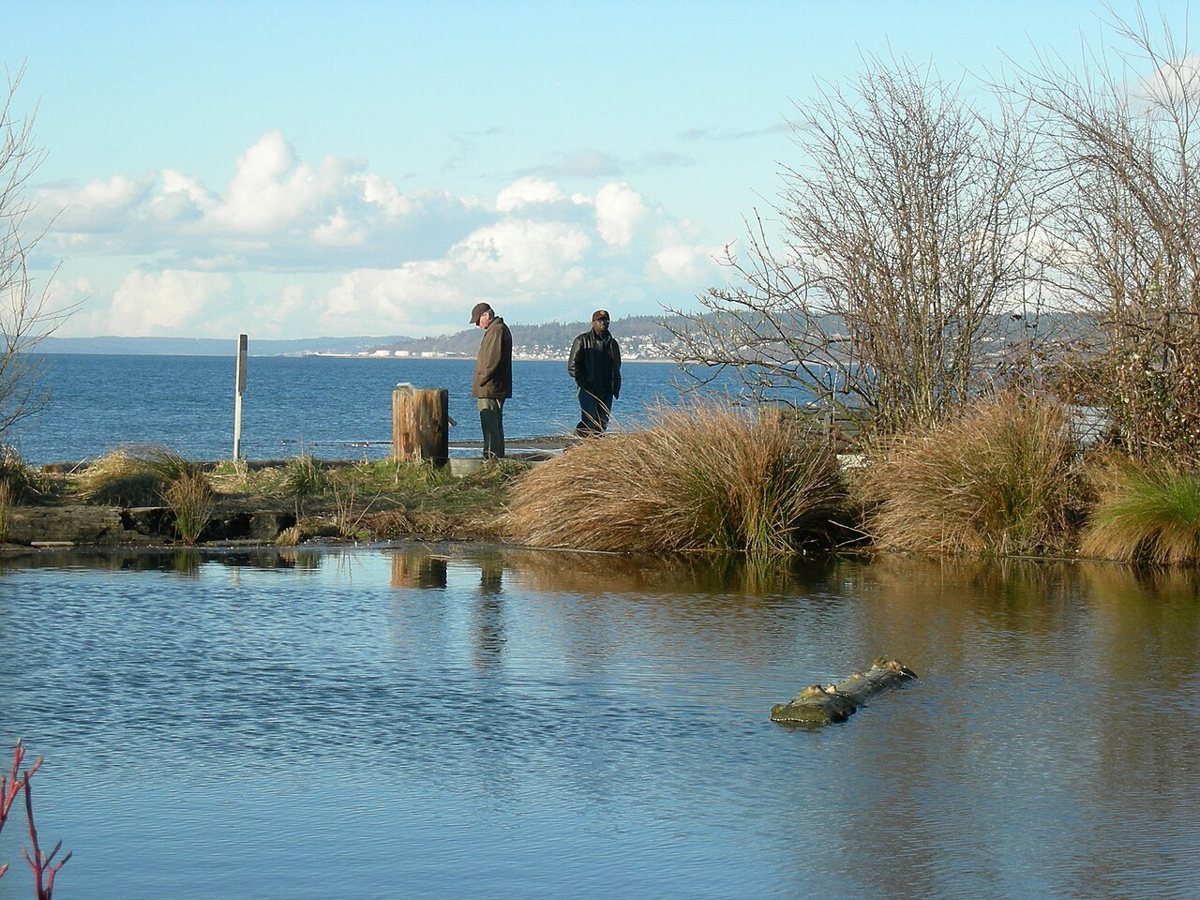
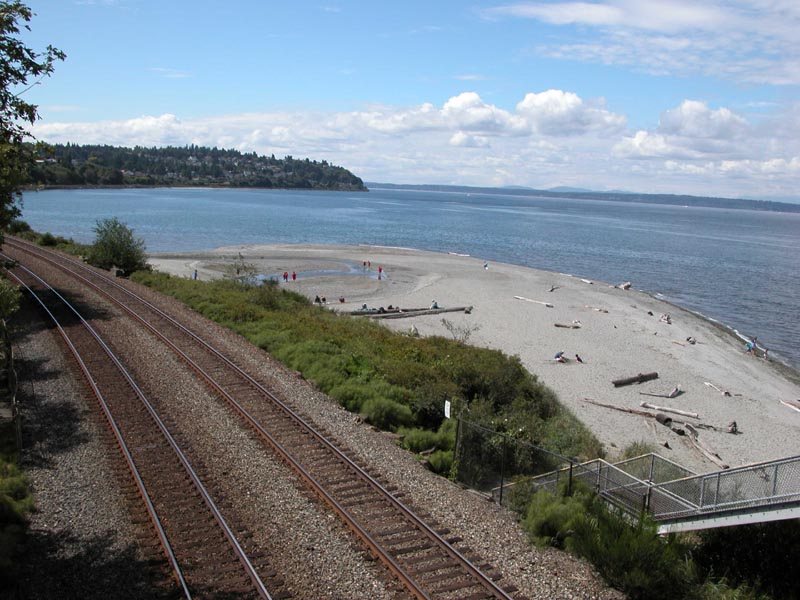
Golden Gardens, at the north end of Ballard, is the closest thing Seattle has to a proper beach town evening. Locals grill and build driftwood forts, claiming one of the fire pits along the sand well before the sun starts dropping behind the Olympics, which in summer takes its sweet time. The park splits into two levels: a wetland and marsh area above, connected by a walkway over the railroad tracks that still carry freight along the shoreline, and the beach itself below, with a boat launch and a small marina. It gets crowded on hot weekends and much less so on a gray Tuesday, which is honestly the better version of it. For a Ballard afternoon after, the old Scandinavian fishing blocks turned brewery row sit a five-minute drive south. Fire pits are first-come, and they go fast after 5 p.m. in summer, so bring your own wood and arrive before the rush if a bonfire is the point.

Myrtle Edwards Park
Myrtle Edwards Park runs along the Elliott Bay waterfront just north of downtown, a narrow strip of paved trail wedged between the water and the train tracks that most visitors never find because it starts past where the pier crowds thin out. It functions less as a destination and more as a corridor: runners and cyclists use it to escape the sidewalk chaos downtown, and it connects north into the Elliott Bay Trail toward the grain terminal and eventually the Ballard Locks for anyone with the legs for it. Ferries cut across the water in the middle distance and container ships sit at anchor, while on a clear evening downtown's skyline sits behind you and the Olympics sit ahead, a strange and pretty sandwich to be standing in. Skip the crowded stretch right by the piers and start the walk from the Olympic Sculpture Park instead, where there is actual parking and public art before the trail opens up. Early morning is the move here regardless of season, before the commuter cyclists pick up speed and while the freight yard next door is still quiet enough to hear the water.

Alki Beach Park
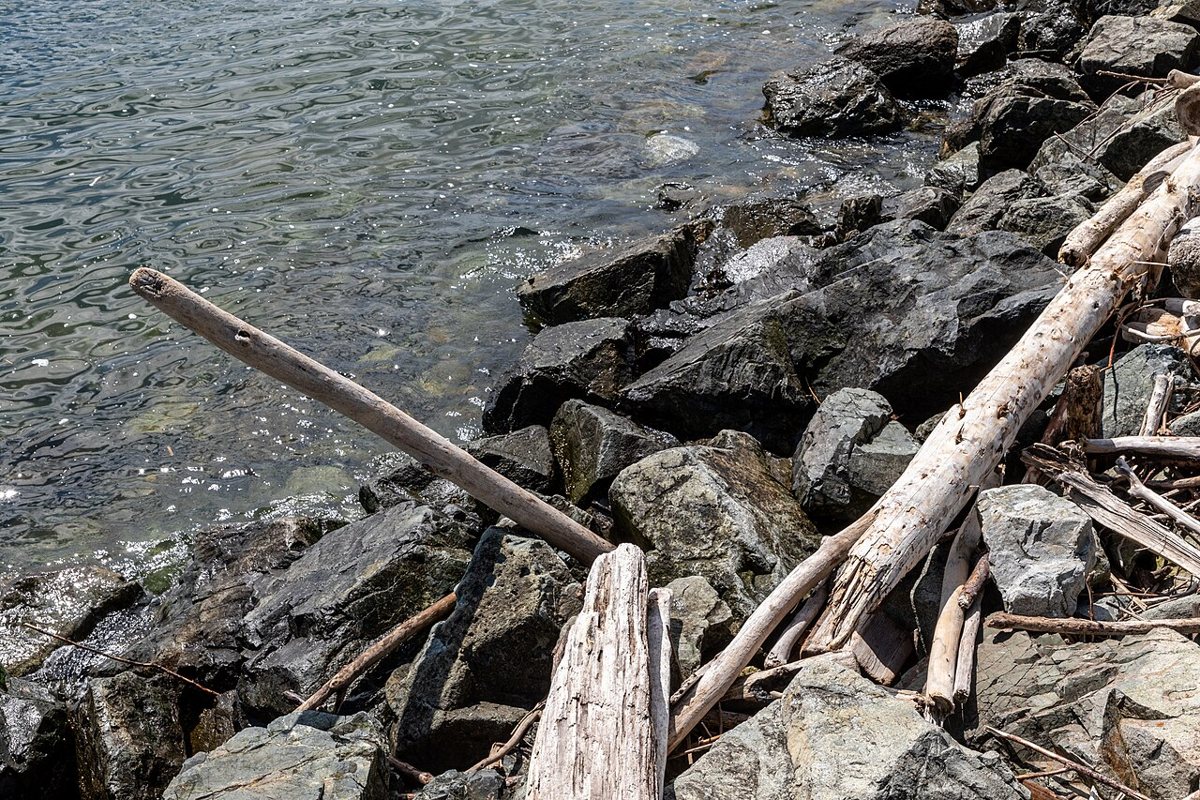
Alki Beach, out in West Seattle, is the neighborhood that likes to remind everyone it marks where the city's first non-Native settlers landed, and it still plays the part of Seattle's beach even though the water rarely gets warm enough to prove it. A wide paved promenade runs the length of the beach, packed with joggers and cyclists, plus a rotating cast of food trucks in summer, and the Alki Point Lighthouse marks the far end for anyone walking the whole stretch. What makes it worth the trip is not really the sand, it is the view back at the city: downtown's skyline sits right across the water, close enough to feel proprietary about, especially at sunset when the light comes in low and orange off the Sound. The trick is the walk or ride out to Duwamish Head, at the park's north tip, which gets the same skyline shot as Kerry Park with a fraction of the company.

Lincoln Park
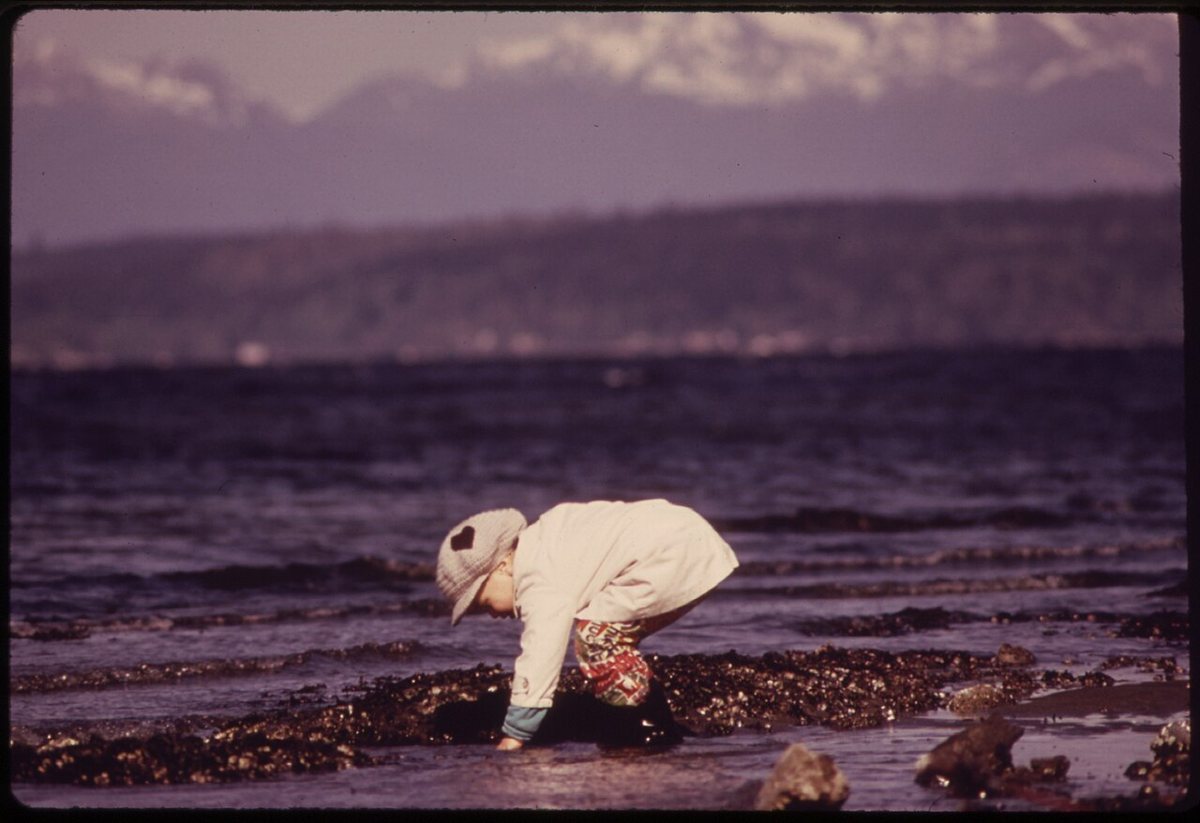
A few miles south of Alki, Lincoln Park gets a fraction of the visitors and offers a different version of the same coastline: forested bluff trails instead of a beach boardwalk, with staircases down to a rocky shore where the Fauntleroy ferry churns past on its way to Vashon Island. An outdoor saltwater pool near the water draws families in summer, but most of the park is just quiet fir and madrona forest along a bluff, popular with West Seattle locals who would rather not fight for parking at Alki. It is a good pick when the goal is shoreline without the scene.
Skyline Views Worth the Climb
Kerry Park
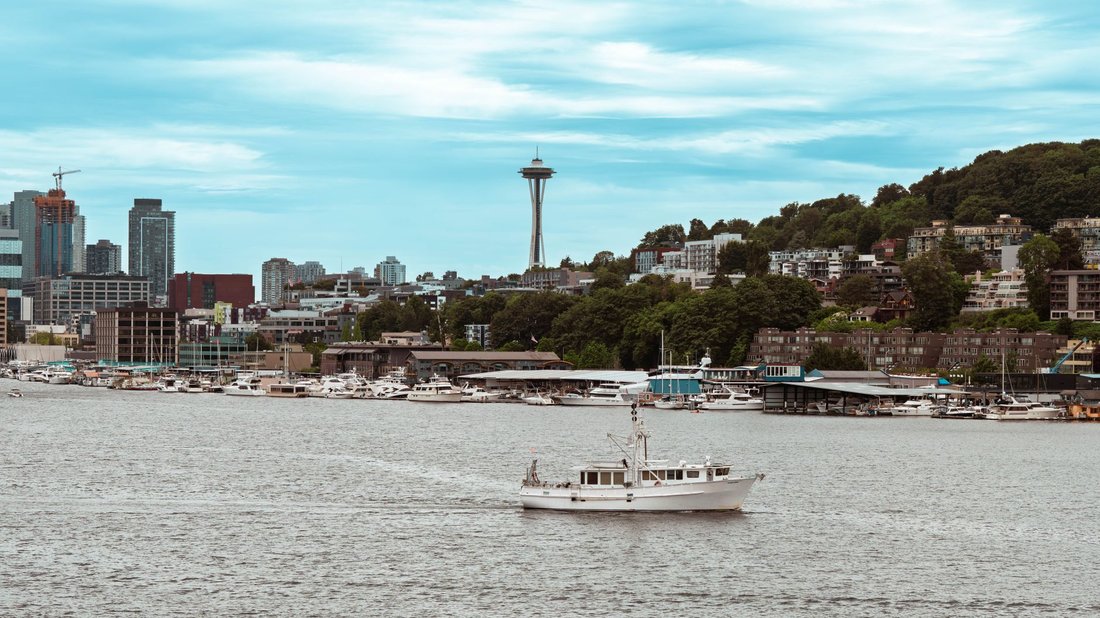
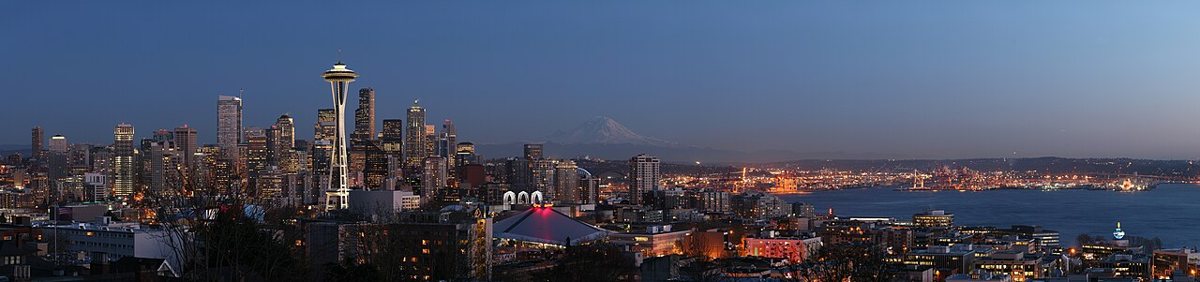
Kerry Park, a small pocket park partway up Queen Anne hill, is the view every postcard and stock photo of Seattle is quietly borrowing from. From the railing you get the Space Needle mid-frame, downtown's towers behind it, and, on a clear day, Mount Rainier sitting on the horizon like it planned the whole composition. Locals call those clear days the mountain is out, and it is less a forecast than a mood: the peak spends most of the year hidden in haze or cloud, so when it appears, people actually stop and look. Kerry Park is tiny, more overlook than park, and it draws proposal photographers, prom photos, and tour buses in equal measure, especially around sunset. Come at sunrise or on an overcast morning instead. The railing is empty, and the soft light does the skyline more favors than the golden-hour crowd scene anyway.

Gas Works Park
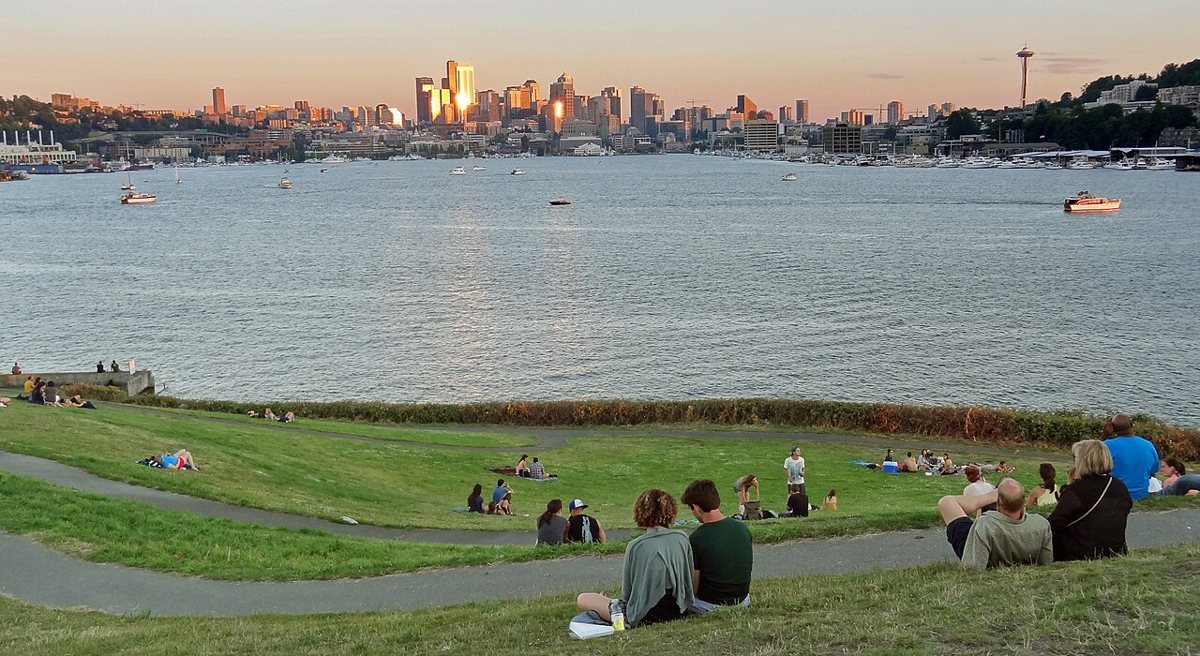
Gas Works Park, on the north shore of Lake Union in Wallingford, is a former coal gasification plant the city could not quite bring itself to demolish. Instead it painted the towers black and fenced off the toxic parts, turning the rest into one of the stranger and better public spaces around. The old boiler house and cracking towers still stand, rusted and floodlit at night, while the rest of the park is open lawn that slopes up to a mound built over an old gasholder, known informally as Kite Hill for what happens there on windy afternoons. From the top, downtown's skyline sits across the water, close enough to watch seaplanes take off from Lake Union in the foreground. It is one of the few parks in the city where the past was not hidden or landscaped away, just repurposed. Bring a picnic and claim a spot on the hill an hour before sunset. Sailboats from the nearby marinas tend to drift into the frame right on cue.

Forested Parks and the Old Growth Nobody Expects
Seward Park
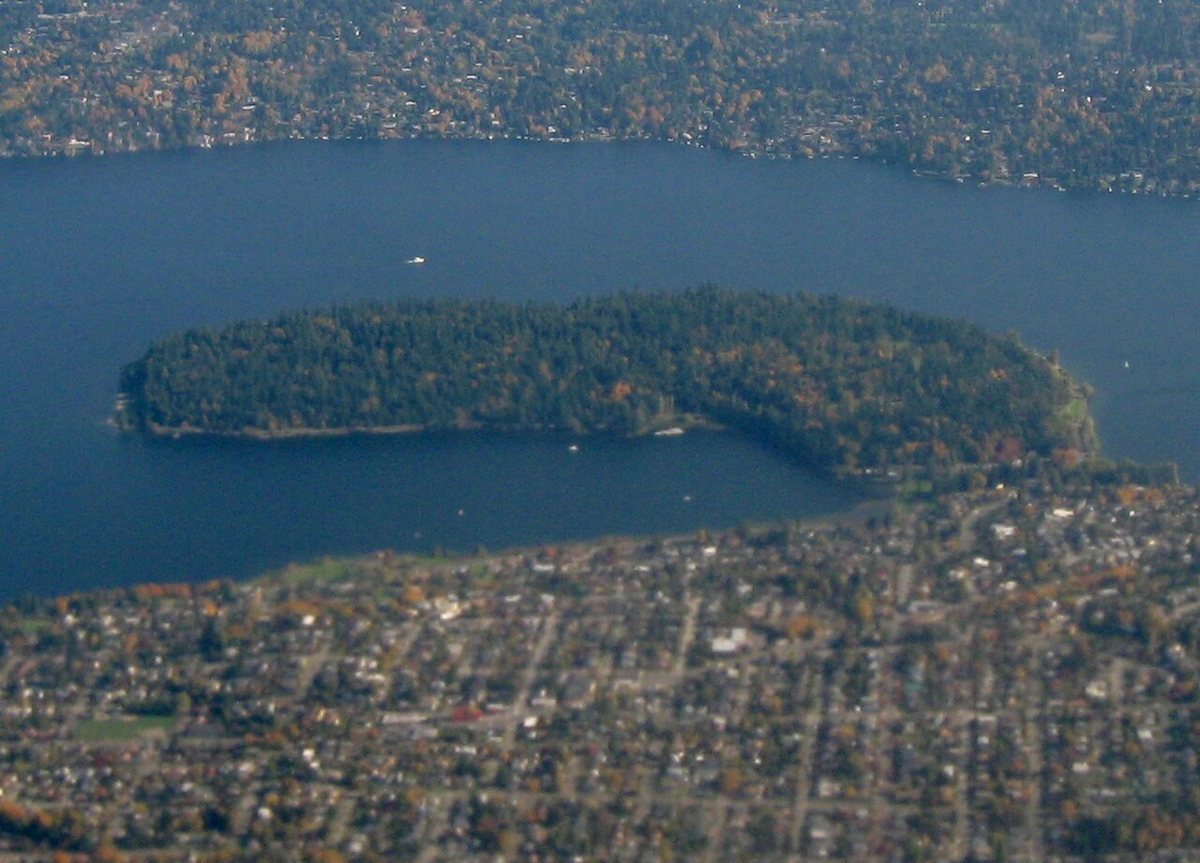
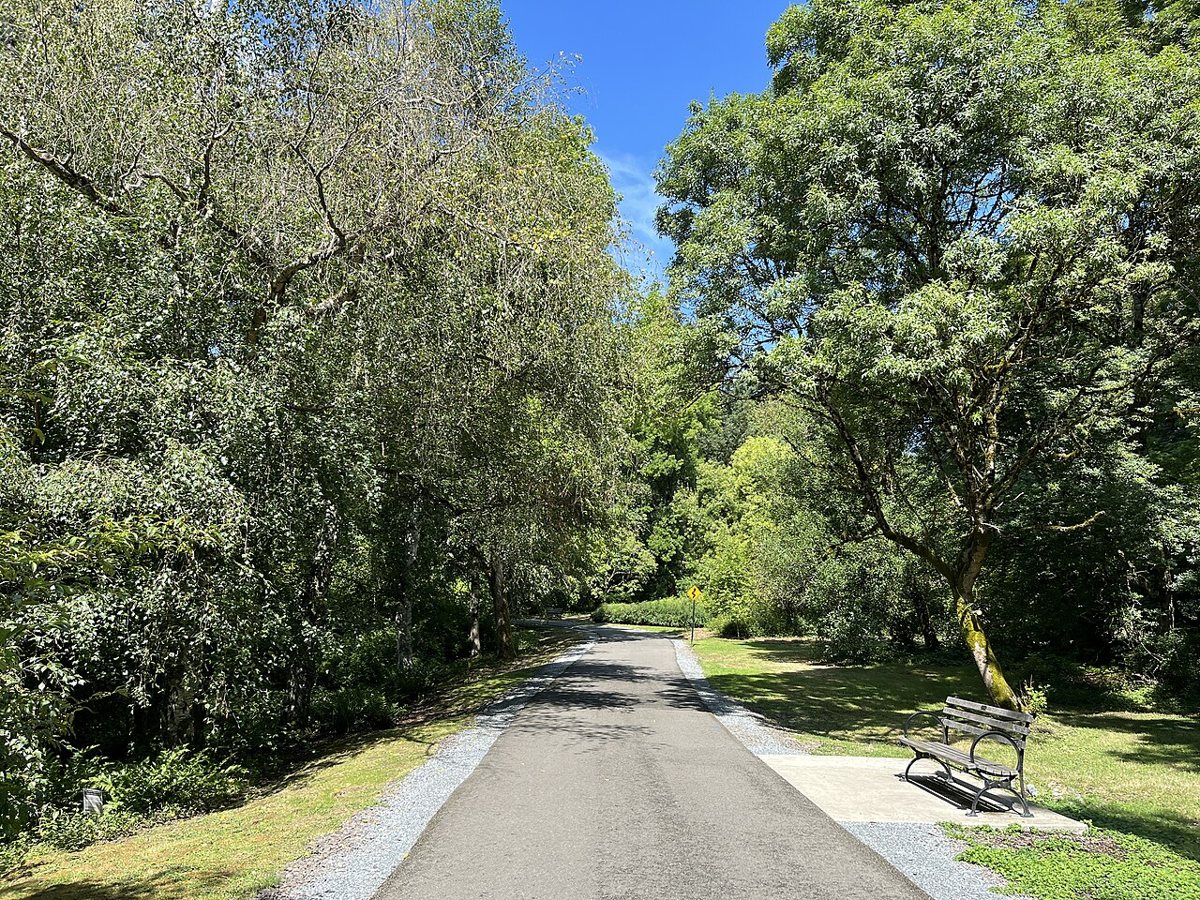
Seward Park sits on a forested peninsula jutting into Lake Washington, and it holds one of the last stands of old-growth forest inside Seattle's city limits, spared from logging a century ago mostly by accident of geography. A paved 2.4-mile loop traces the shoreline, popular with runners and cyclists. The occasional bald eagle nests near the point too, drawing a small crowd of birders with long lenses most mornings. Inland, dirt trails cut through cedar and Douglas fir that were already tall before the city around them existed, and a small art studio and amphitheater sit near the entrance for anyone who wants a reason to linger past the walk. A swimming beach on the north side stays less crowded than Green Lake and has a better view across the water toward Mercer Island. Regulars walk the loop counterclockwise out of habit since it's flat and popular; go the other direction on a busy Saturday and the whole walk turns into dodging strollers.

Washington Park Arboretum
The Washington Park Arboretum, straddling the border between Madison Valley and the south end of Capitol Hill, holds 230 acres of collected trees that read as a forest rather than a garden, run jointly by the city and the University of Washington. Paths wind through groves organized loosely by species and origin, and the place changes character completely by season: magnolia and cherry blossoms in spring, then a genuinely spectacular run of Japanese maples in fall. Camellias hold on through the gray months when little else is blooming. A formal Japanese Garden sits within the grounds behind its own gate, and the Waterfront Trail on the arboretum's eastern edge threads through Duck Bay and out across the marshy islands off the shoreline on a boardwalk good for slow walking or a rented kayak from the nearby marsh launch. The smartest timing move here is a November visit, when the crowds thin out and the maples are still holding color, in a park most locals already know well.

Carkeek Park
Carkeek Park, tucked into a ravine in north Seattle near Broadview, does double duty as forest and beach in a way few city parks manage. Piper's Creek cuts through the middle of the park on its way to Puget Sound, and every fall it hosts a real salmon run, chum mostly, that draws school groups and volunteers to watch fish fight upstream through a creek most of the year almost nobody notices. Trails climb the ravine walls through second-growth forest, and a pedestrian bridge over the railroad tracks drops walkers onto a rocky beach with views across the Sound to the Olympics. Kids gravitate to the metal slide shaped like a salmon near the main picnic area, exactly as fun as it sounds and exactly as slow as a decades-old metal slide should be. Check with local watershed volunteer groups before visiting in October if the salmon run is the goal; timing shifts year to year with rainfall.

The Best Parks in Seattle for Everyday Life
Green Lake Park
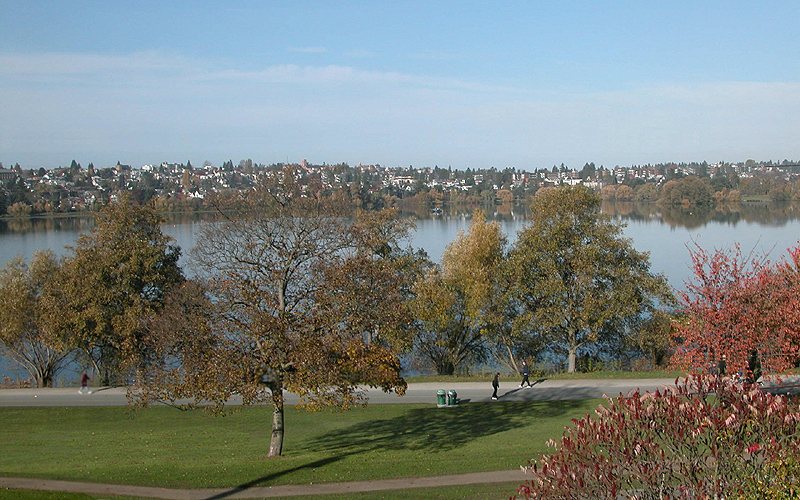
Green Lake Park, in the neighborhood of the same name, functions less as a scenic destination than as a piece of daily infrastructure, and that is a compliment. A paved 2.8-mile path circles the lake, shared unevenly by runners, cyclists, rollerbladers holding stubbornly to a habit from decades back, and new parents pushing strollers three abreast. The lake itself hosts rowing crews at dawn and paddleboarders by midmorning. A roped-off swimming area gets legitimately crowded on the first hot weekend of the year, because Seattle only gets a handful of those and everyone knows it. A community center and outdoor courts sit along the eastern edge. A small theater rounds out the options if the loop itself is not enough activity. It is not chasing anyone's idea of the best parks in Seattle for solitude, it is the park locals actually build their week around. Quiet-seekers ditch the paved loop for the unpaved dirt path that runs alongside it, easier on the knees, and almost nobody uses it.

Volunteer Park
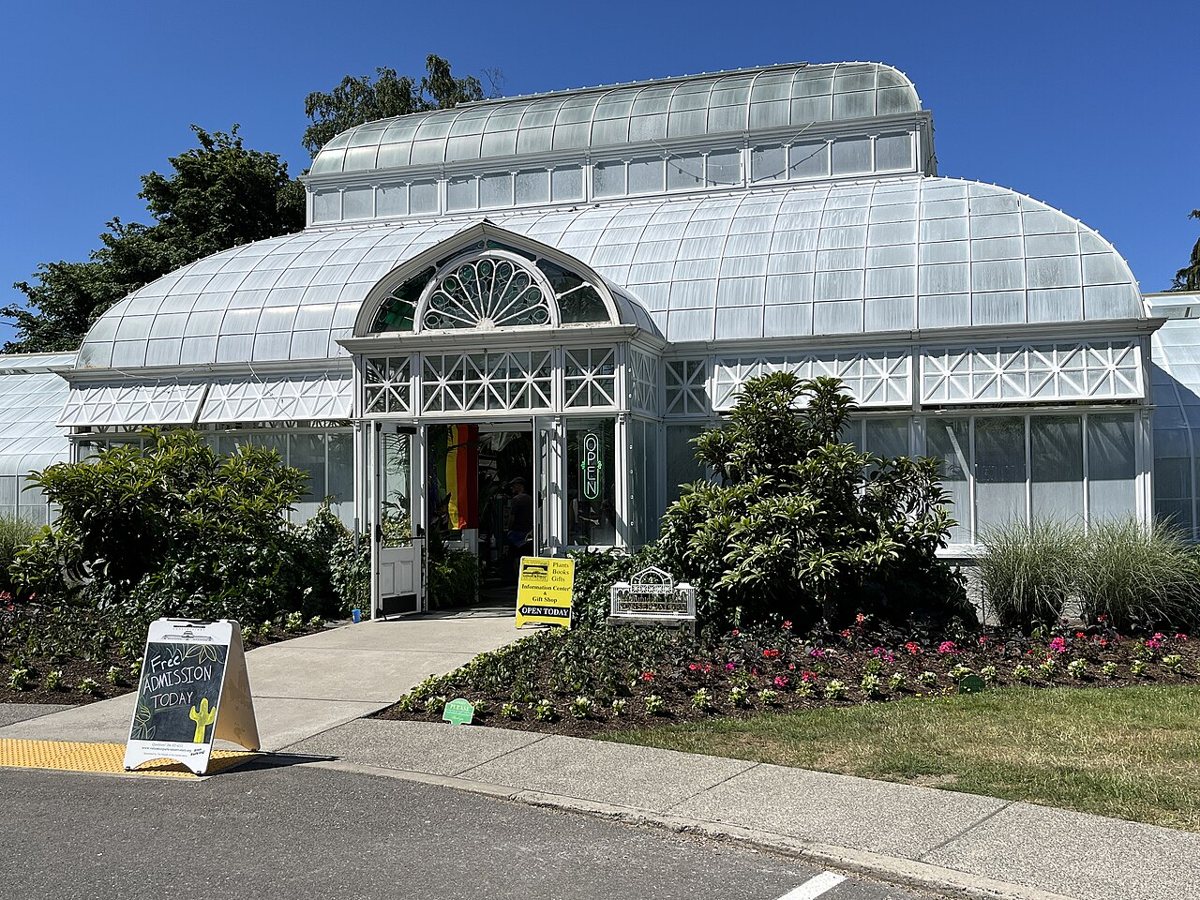
Volunteer Park anchors the north end of Capitol Hill, laid out originally by the Olmsted Brothers, and it still shows their touch in the wide lawns and formal sightlines after a century of use. The water tower near the park's high point has a spiral staircase locals climb for a free 360-degree view of downtown and the Cascades, with the Olympics visible on the other side on the right day, no ticket required. A glass conservatory near the entrance houses cactus and palm rooms alongside an orchid room, and usually charges a small entrance fee, worth checking current hours for since it is not always open. The Seattle Asian Art Museum sits inside the park too, and the lawn out front, sloping down toward the reservoir, is where half of Capitol Hill seems to end up on the first genuinely warm Saturday of spring. The water tower staircase closes earlier than the park itself, so if the view is the goal, do not save it for last.

A Few More Worth Knowing
The twelve above cover the range, but a short list of smaller parks earns at least a mention. Magnuson Park, on Lake Washington's western shore in northeast Seattle, mixes a large off-leash beach with reclaimed wetlands built over what used to be a naval air station, and it draws a quieter, more residential crowd than Green Lake a couple of miles south. Cal Anderson Park, on Capitol Hill, functions as that neighborhood's living room, a flat green square with a reflecting pool and a running track for anyone who wants a park within walking distance of a dozen bars and diners rather than a drive. Jefferson Park, up on Beacon Hill, pairs a golf course with sweeping views east toward the Cascades and gets a fraction of the visitors its outlook deserves, mostly because Beacon Hill still flies under most tourists' radar entirely. None of the three needs a special trip on its own, but any of them rounds out a day built around the bigger names.
Getting There, Parking, and What Actually Costs Money
Most of these parks are easiest to reach by car, and parking is free almost everywhere, which is not something to take for granted in a city that seems to charge for parking on principle elsewhere. The catch is volume, not price: lots at Discovery Park, Golden Gardens, and Green Lake all fill by midmorning on the first sunny weekend of any given month, and street parking around Kerry Park disappears fast on summer evenings. The Burke-Gilman Trail connects several of these parks by bike, threading from the Ballard area through Fremont near Gas Works, past the University District, and out toward Magnuson Park and beyond. Bus service reaches most of the neighborhoods listed here, though frequency drops outside peak hours, and light rail currently gets you close only to Volunteer Park and Cal Anderson Park via the Capitol Hill station. Almost everything on this list is free to enter and open year-round, with only a handful of features, like the Volunteer Park Conservatory or paid parking at a few beach lots, charging anything at all, and it is worth checking current hours before a special trip since city park facilities shift schedules by season. Weather is rarely the obstacle visitors assume it will be. Locals plan around drizzle the way people elsewhere plan around traffic, which is to say they mostly do not, they just bring a decent jacket and go anyway, and a light rain tends to clear the popular viewpoints of everyone but the people who actually live here.
- Weekday mornings beat weekend afternoons at nearly every park on this list, especially Discovery, Golden Gardens, and Green Lake.
- Layer up regardless of the forecast. Bluff and shoreline parks like Discovery and Alki catch wind the inland neighborhoods do not.
- Off-season visits, roughly November through March, trade crowds for quiet, and several parks, the Arboretum especially, arguably look their best in fall rather than summer.
- Dogs are welcome on leash almost everywhere, with designated off-leash areas at select parks like Magnuson; check posted signs since rules vary park to park.
Ask what these parks have in common and it is not scenery, exactly, though there is plenty of that. It is that almost none of them charge admission, none require buying anything to belong there, and the city decided, decades before its current wealth arrived, that shoreline and forest and a decent view counted as public property rather than amenities. That decision has mostly held, even as the skyline around Gas Works and the housing near Discovery Park changed faster than anyone from here particularly wanted, and even as the tech money that reshaped whole neighborhoods never quite figured out how to put a fence around any of this.
My own rotation, if pressed, runs to Seward Park on a weekday morning when the light comes through the cedars flat and gray, and Kerry Park exactly twice a year, when the mountain is out and a friend from somewhere flatter is in town and needs convincing. The rest of the list earns its spot too. Go find the one that fits how you actually want to spend an afternoon, not the one that photographs best on someone else's feed.