Best Italian Restaurants in Ballard, Tried and Tested
Ballard has enough Italian kitchens now that the question isn't where to find one, but how to tell the ones doing real work from the ones coasting on candlelight.
Walk Ballard Avenue on a Saturday at six and you'll pass at least three restaurants with their doors propped open, garlic and browned butter drifting out into the cobblestones, and a cluster of people standing around not quite in line, checking their phones, pretending they're not waiting for a table. That's the tell. The best Italian restaurants in Ballard don't need sidewalk sandwich boards shouting about it. They just smell like something's actually happening in the kitchen, and the crowd sorts itself out from there.
Ballard earned its dining reputation the slow way. It was a fishing town before it was a brunch destination, Scandinavian to its bones, and the seafood instinct never left even as the storefronts filled in with wine bars and pasta joints. That history matters here because it shapes what a serious Italian kitchen in this neighborhood tends to do well: they lean on Pacific Northwest fish and produce rather than importing an idea of Italy wholesale. A good Ballard menu might put local mussels or rockfish next to a hand-cut noodle, and that's not a compromise, it's the neighborhood talking.
What separates the best Italian restaurants in Ballard from the rest
Start with the pasta. If a menu lists eight pasta dishes and the kitchen is a two-person operation, be skeptical. A restaurant making fresh pasta in-house usually can't and won't offer everything at once, because dough takes time and a proper sfoglia only holds up for a day or two. Look instead for a short list that changes with some regularity, maybe five or six pastas, a couple of secondi, whatever came in that week. That constraint is a good sign, not a limitation. It means someone is rolling dough by hand rather than pulling bags from a walk-in.
Texture tells you a lot before flavor does. Fresh egg pasta should have a slight give to it, almost silky, distinct from the springier bite of dried semolina shapes, which are also legitimate when used correctly for the right dish. The mistake is a kitchen that treats all pasta the same way regardless of shape, drowning everything in one heavy sauce. A kitchen that's paying attention matches a delicate filled pasta to a light butter or brodo, saving the bigger braises for a sturdier shape that can carry the weight.
Wood-fired versus braise-driven, and why it matters
Ballard's Italian spots tend to split into two camps, and neither is inherently better. Wood-fired kitchens build the whole experience around a hot oven, char, blistered crust, quick-cooked vegetables, a Neapolitan or Roman pizza program running alongside the pasta. Braise-driven kitchens work slower, building ragùs and osso buco-style dishes over hours, the kind of cooking that rewards a menu that barely changes because the technique is the point. Neither approach signals quality on its own. What signals quality is consistency of intent: an oven-driven place should nail char and crust every time, and a braise-driven place should have depth in its sauces that you can taste even in a simple dish like a cacio e pepe or a plain tomato sugo, because a kitchen that can make a great plain sauce can generally be trusted with everything else on the menu.
Reading the wine list and the aperitivo hour
A real wine list in a neighborhood Italian restaurant should feature Italian regional bottles you don't recognize, not just a token Chianti and a Pinot Grigio to round out the page. Look for by-the-glass options built for drinking before or alongside food rather than just after, an amaro or vermouth-based cocktail on the menu, maybe a spritz built with something other than the one brand everyone already knows. Aperitivo culture, the idea of a lighter drink and a small bite before the main event, has taken hold in pockets of the neighborhood and it's worth seeking out, especially on a weeknight when a full dinner feels like too much commitment.
Corkage policy and a staff that can talk through the list without reading you the back label are both good signs. So is a bar that's actually staffed for cocktails and not just an afterthought next to the host stand.
How to tell a serious kitchen from a red-sauce tourist trap
- The menu is shorter than you'd expect and changes with the seasons rather than staying static year-round.
- Bread and olive oil, if offered, taste like someone chose them on purpose rather than buying whatever showed up in the last delivery.
- Portions of pasta are appropriately modest, sized as a course rather than a mountain meant to be a whole meal, because that's how it's eaten in Italy and it usually signals a kitchen following technique rather than chasing value perception.
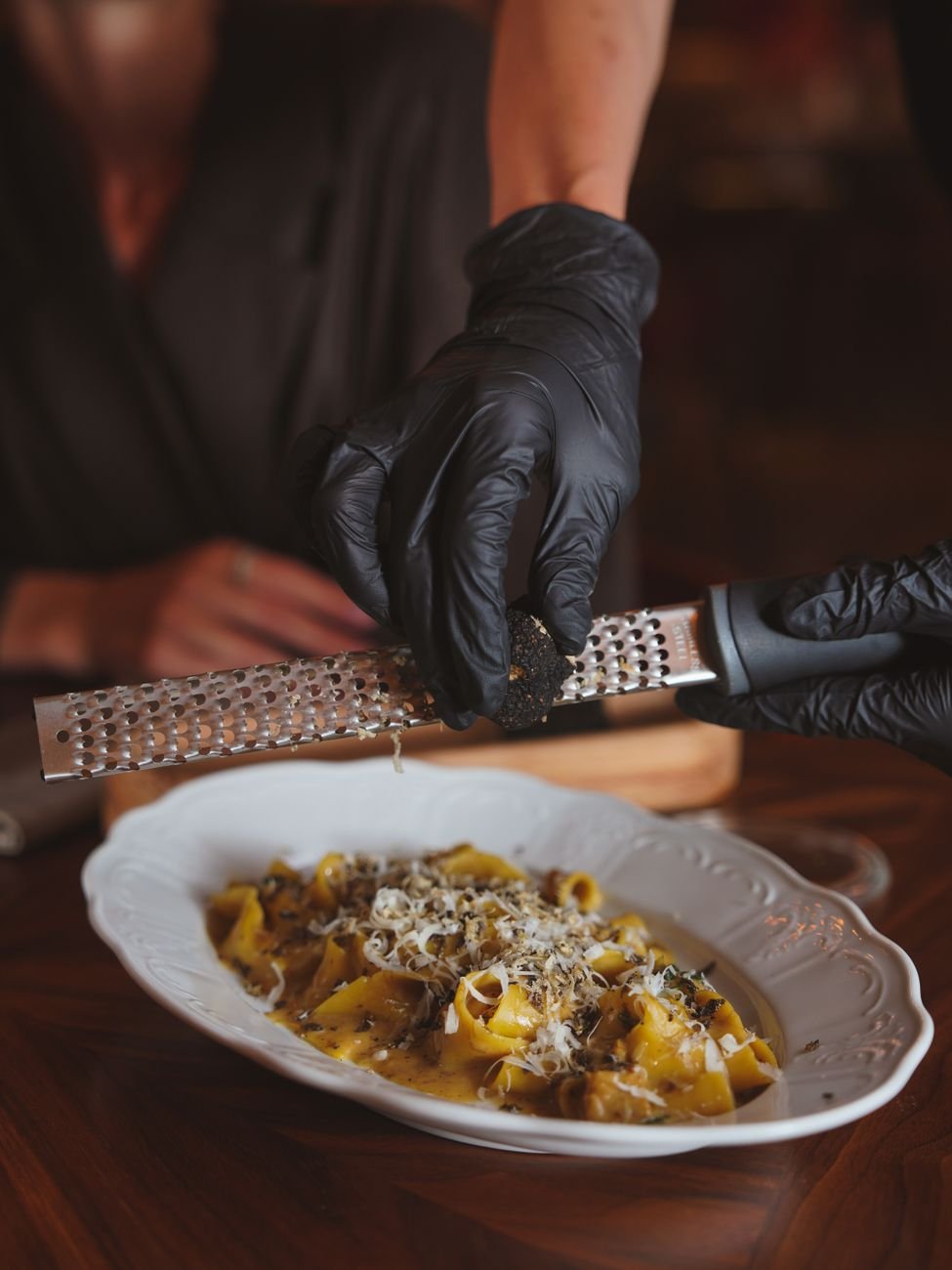
- Parmesan and other cheeses are shaved or grated to order, not pre-shredded from a bag.
- Prices track with quality of ingredient sourcing rather than location alone. A restaurant charging a premium simply because it sits on Ballard Avenue, without the cooking to back it up, is worth a second look before you book.
None of this requires insider knowledge. It requires paying attention for the first five minutes of a meal, before the wine kicks in and you stop noticing.
The reservation reality on weekends
Ballard's dining strip gets a serious crowd on Saturdays, partly thanks to the Sunday farmers market drawing people into the neighborhood the day before and partly because it's just become a legitimate destination on its own. If you're set on a specific place for a Friday or Saturday dinner, book ahead, ideally a week out for anything popular. Walk-in seating at the bar is often your best bet for a spontaneous weeknight visit, since bar seats turn over faster and kitchens frequently run a slightly different, more casual menu there. Sunday itself has its own rhythm: the farmers market brings foot traffic through late morning into early afternoon, so a number of restaurants either open early for a market-adjacent lunch crowd or hold off until evening. Calling ahead, even for a same-day inquiry, still works better than showing up and hoping.
The other piece of reservation reality worth knowing: showing up right at opening, whether that's 4:30 or 5, remains the most reliable way to get a table without a wait, even at places that don't take reservations at all.
Between the wood ovens, the braises, and the rest of Seattle's fast-changing restaurant scene pulling the same weekend crowd, the neighborhood's Italian cooking has become one of the more honest food stories in the city: not flashy, not trying to be Rome, just cooks paying attention to dough, fish, and a short list done well. If you want proof, skip the place with the sandwich board and follow the smell of browned butter instead. It's usually a short walk, and if you need a plan for the rest of the evening, a good Seattle bar is never far enough away that a wait for a table has to feel like wasted time.