Best Food Halls in Seattle You'll Actually Love
Seattle's food halls solve a very specific problem: getting a table of picky eaters to agree on dinner without anyone settling.
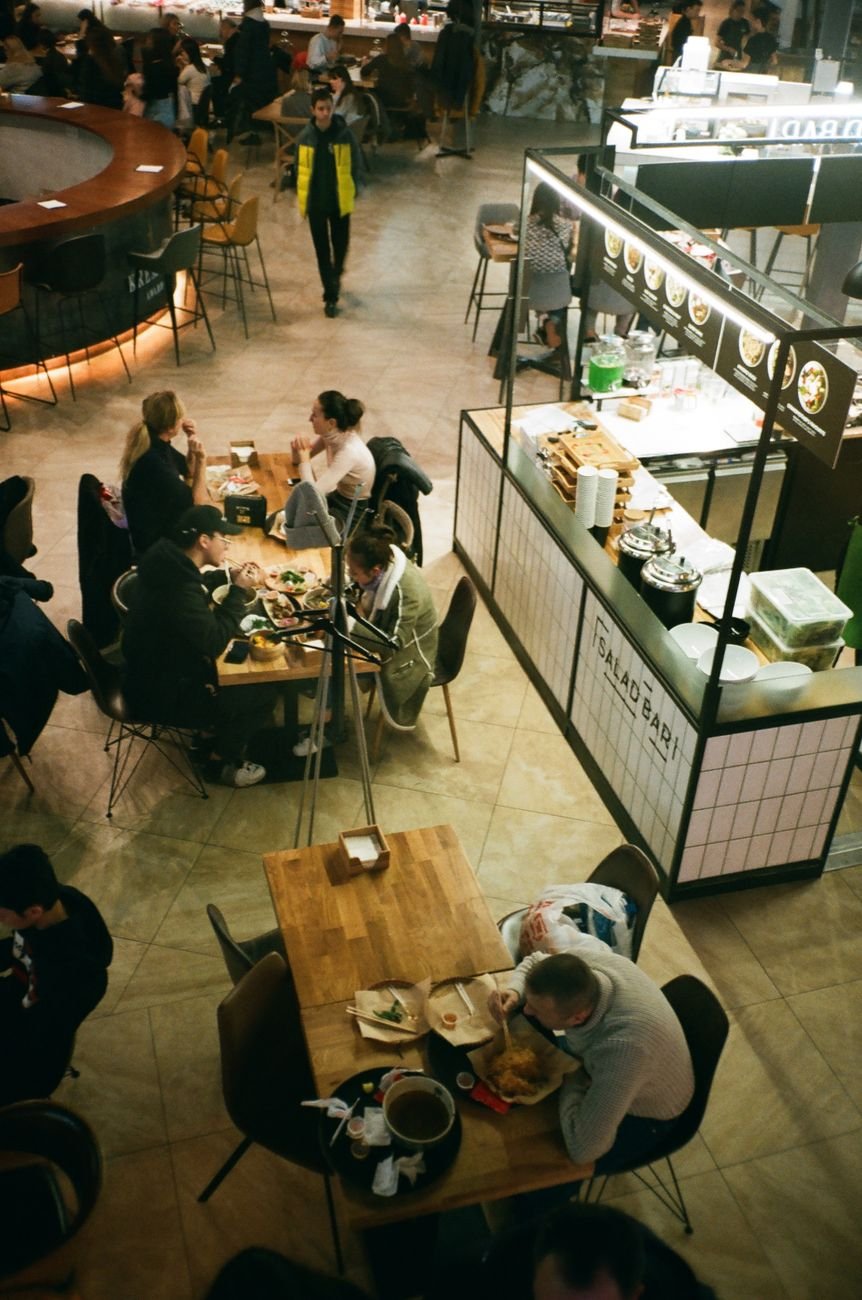
The scene repeats itself most weeknights inside any of the city's food halls: four people from four different offices meet up hungry, and within about ninety seconds they've split in four directions, because nobody in the group wants pho and dumplings and a burger and a bowl of curry to somehow be the same meal. That's the real case for the best food halls in Seattle. Not the string lights, not the communal tables, but the fact that indecision stops being a problem the moment everyone can order separately and still sit down together twenty minutes later.
Food halls took off here for a practical reason as much as a stylistic one. Shared kitchen space and shared front-of-house staff let a cook with one good idea open a stall without financing a full buildout, a walk-in, a liquor license, a dining room. That's why a strong hall often has more first-time operators than a comparable block of standalone restaurants, and why the food inside tends to be more specific and less hedged than a menu built to please everyone. A stall doing one thing well can survive in a way a restaurant trying to do twelve things sometimes can't.
What Sets the Best Food Halls in Seattle Apart
Skip the comparison to a mall food court. The better halls sit inside actual neighborhoods, not off a highway exit, and they're built around a room people already wanted to be in. Look for a shared bar pouring local taps rather than fountain soda behind a rope line. That single feature changes the whole room, because it gives a table a reason to linger instead of eating fast and clearing out. The other tell is how the vendors were chosen. A hall worth your time picked cooks that don't compete for the same three dishes. If four stalls are all selling a version of the same bowl, someone wasn't paying attention when they leased the space.
How to Read a Hall Before You Order
Walk the room once before you commit to a line. Notice which counter has regulars rather than people staring up at a menu board for the first time — that's usually the stall worth the wait. Order one small thing from two different vendors before you decide where dinner actually happens. If there's a shared bar, grab a stool and a half pint while the rest of your group is still deciding; it buys everyone patience. And if a stall looks new, ask what changed. Vendors rotate through these halls more than a fixed restaurant roster would, so the stall you loved in spring might be a different operator by fall.
What to Actually Order
Go in expecting range rather than a theme. A good hall usually has something built around the char and sweet-soy glaze of Seattle-style teriyaki, a counter doing Hawaiian plate lunch with the mac salad done properly cold and a little tangy, and at least one stall that takes coffee as seriously as the roasters running a café a few blocks away. Depending on the neighborhood, you might find a bowl of pho with a broth that's clearly been simmering since before your shift ended, or a rotating seafood counter doing something simple with Dungeness crab or local oysters when the season allows it. None of it needs to be fussy. The point of a stall is depth in one direction, not range across twelve.
A short list of what to look for
- A shared bar or taps that serves the whole room, not just one stall
- At least one vendor doing something specific rather than a little of everything
- Seating that doesn't force strangers to share a two-top meant for one party
- A posted rotation or sign explaining which stalls are new since your last visit
- An off-hour crowd of regulars, which usually means the food holds up on a normal Tuesday, not just opening week
Where They Cluster
You'll find them scattered through Capitol Hill, Fremont, Ballard, Columbia City, South Lake Union, Queen Anne, and Georgetown, each with its own personality shaped by whoever's already eating there. A hall near South Lake Union tends to fill up fast around six with people grabbing dinner before a longer commute home. One in Columbia City moves at a slower pace, closer to a neighborhood living room than a food court. None of that is a ranking. It's just worth knowing before you show up starving and expect a table in ninety seconds. When a hall is slammed, the surrounding blocks tend to reward a short walk, whether that means a sit-down dinner in Capitol Hill or a weekend brunch table the next morning.
The Real Draw
Seattle doesn't need another reason to be self-conscious about how it eats, and food halls aren't a trend the city imported to look cosmopolitan. They're a solution to an old, unglamorous problem: getting a mixed group fed without anyone compromising, and giving small operators a low-risk way to find out if their idea has legs before they sign a ten-year lease. The best food halls in Seattle aren't the ones you photograph on a first visit. They're the ones you end up back at on a rainy Tuesday, when nobody feels like cooking and nobody can agree, and for once you don't have to.